Why modern fast food branding has lost its soul
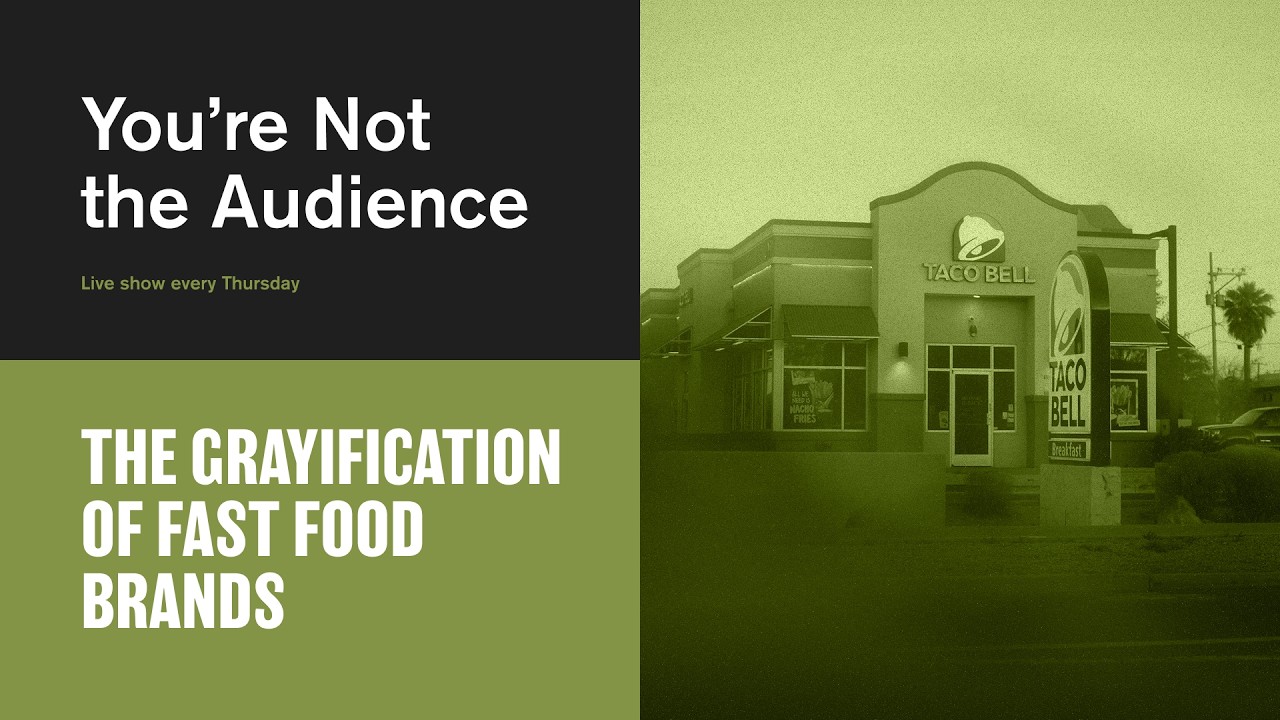
For a kid growing up poor in small-town Washington, a trip to McDonald’s or Dairy Queen felt like a special night out. In this clip from You’re Not the Audience, Parliament Creative Director Calvin Ross Carl explains how fast food brands have let the charm, joy, service, and human connection that made them special vanish. Using Taco Bell’s journey from colorful Arizona Sunset interiors to a soulless restaurant of the future, he shows how chasing trends, jester-style social media, and short-term profit has led these brands to throw away the heritage and timelessness they spent decades earning. It’s from the You’re Not the Audience episode on fast food brands, The Grayification of Fast Food Brands.
Watch the full episode
Outline
Summary
Calvin Ross Carl explains why he cares about fast food. Growing up poor in small-town Washington, a fancy night meant McDonald’s or Dairy Queen, and those places still hold a soft spot for him. But the charm, joy, service, and human connection that made fast food brands interesting have vanished, and in a business built on tiny moments, that loss matters.
He defines heritage as the true history, soul, symbols, messaging, and products that made a brand matter originally, ingrained in the zeitgeist even for people born long after. Taco Bell shows what happens when a brand turns away from it: its colorful Arizona Sunset interiors have given way to a restaurant of the future that looks like a sad corporate office, or as a viewer puts it, a generic wine tasting room.
Calvin traces the cause to brands becoming advertising machines: chasing trends for short-term social attention, adopting the same jester voice online, and imitating each other in pursuit of short-term profit. The result is that they’re throwing away timelessness, which is real, hard to create, and simply takes time.
Highlights
Fast food once felt like a special excursion for families.
Heritage is the history and symbols that made a brand matter originally.
Taco Bell traded Arizona Sunset interiors for soulless universal design.
Every brand’s social account has become the same jester.
Throwing away timelessness is mistake number one.
Key insights
Heritage holds a brand’s deepest belief
Returning to the original way of doing things matters because that’s where a brand’s grandest, most impactful moment of belief lives.
Advertising isn’t brand building
Chasing trends buys short-term attention, but it doesn’t build the brand further or establish who a company is.
Imitation kills fandom
When brands copy each other, people lose sight of who they are, and nobody becomes the kind of fanatic advocate who tells friends they have to go.
Timelessness can’t be manufactured
Timelessness just takes time. Brands that already have it are squandering an advantage newcomers can never buy.
Detailed analysis
The clip combines a personal story with a structural critique. Calvin’s memories of fast food as a treat make the stakes concrete, while the Taco Bell example shows how a redesign aimed at universal appeal can strip out everything memorable.
He also credits a moment when Burger King doubled down on the King, briefly rediscovering who it was, as proof that brands can find their way back when they stop speaking the language of the internet and start speaking the language of themselves.
Conclusion
If you have heritage, equity, and decades of history behind you, Calvin’s advice is simple: don’t throw it away. Invest in it.
Transcript
Let’s talk fast food. So the reason I want to talk about this, and why I actually care a lot about what fast food brands do, is I grew up a really poor kid. We grew up in small-town Washington. We didn’t have a lot of excess money, and a fancy night was going to McDonald’s or going and getting something from Dairy Queen—which, I don’t even—Dairy Queen has just been so sad for so long. I don’t even think we’re going to talk about Dairy Queen. But all of those places have always been ingrained in my mind as these special places to go out, as an excursion with your family, even when your family was as odd as mine. And it just felt like a really special place. And so I’ve always had this soft spot for the classic cheeseburger, the goofy environment, all of the things that come with that.
And the reason I want to talk about it is a lot of that stuff that I think made fast food brands interesting has just vanished: the charm, the joy, the service, the human connection. And those are all important pillars of the experience for any hospitality business, and especially ones where it’s about cranking out food as fast as possible. You only have so many tiny, small moments to make an impact. So that’s why, to see that all go away, to see all these places turn sad and gray and enshittify themselves, is just such a bummer.
But let’s start talking about some of the aspects where I see they’ve gone wrong, things they’ve turned away from. So first, I think there’s buzzwords that surround this stuff, like heritage and timelessness. So what are heritage and timelessness? What are these things? When we talk about heritage, all of these companies I’m talking about, like McDonald’s, Taco Bell, Wendy’s, Pizza Hut, all of these places that do fast food, they all have this incredibly long history and heritage. And that heritage is the true history and soul, and the symbols and the messaging and all the products that made that brand matter originally. Even if you weren’t born when that company started, it’s somehow ingrained in the zeitgeist that you know these things. It’s all that collected knowledge that we have.
And so when we talk about heritage and timelessness, it’s not so much about authenticity. Authenticity is a buzzword. You either got it or you don’t. Heritage is usually about returning to the original way of doing things, the things that actually worked for you before, because that’s where your grandest, deepest, most impactful moment of belief is for your brand. So when they turn away from that, you can really, really feel it, because it just feels forced and fake and a little soulless.
I mean, so, okay, Gabrielle brought up Taco Bell in the chat, and—oh, dang. Let’s look at some Taco Bell stuff really fast. I think it’s hard to remember that—oh, let’s see. Oh, my screen’s not working here really fast. Let me see why this isn’t working. All right, you’re going to see me try to fix this while we’re doing it. Of course, there’s always something that has to come up, right? We’re going to do it live. There we go. All right, now everyone should be seeing some beautiful Taco Bell.
So I feel like we’ve all kind of just forgotten now that this is what Taco Bell looked like. There’s a guy on a Substack or something like that who’s done some great collections of Taco Bell histories, of Pizza Hut histories. This is pulled from him. I’ve got a link down below to all the Taco Bell stuff. But you know, Taco Bell’s original look was like this. But the one that I think we really started to remember—they actually started to sink a little bit during this day, when they had this very classic look that we all think of. Then they switched to the very, very ’80s and ’90s interior, and that’s the one that really stuck.
And yeah, There’s No Need To says it was totally unforgettable. Absolutely agree. This is just such a unique look. It’s so colorful. No one went in on this. And now this is a big, exciting announcement that Taco Bell just put out. This right here, they’re like, “It’s the Taco Bell of the future.” And it just looks like a sad corporate office. All history removed. It is completely universal design, to a degree where it is just absolutely soulless. Yeah, yeah, they were called the Arizona Sunset interiors. That’s great. So now they’re looking like this, and it’s just the saddest thing ever. So that’s what I’m specifically talking about: there is obviously some bit of heritage that just got lost here.
And so some other signs of this, where we start seeing a lot of these brands start turning to—oh, Aaron said, “Taco Bell modern vineyard and wine tasting.” Oh, that’s so good. That’s absolutely what it is. It’s like a generic, soulless wine tasting room.
Okay, so what are some signs that started adding up to this absolute soullessness of a lot of fast food brands? I think a lot of fast food companies, rather than building brands, really started just becoming advertising machines. So it wasn’t about building that brand further. It was all about chasing trends rather than establishing who they are. And the problem with that is you only chase trends to acquire short-term social attention. Man, are we in an attention economy right now or what?
And you even see this in some ways where all of their social media accounts have become this goofy, generic jester messaging. Even when their brands aren’t necessarily a jester, they’ve all become a jester. You see Burger King poking fun at McDonald’s, at Taco Bell, and they’re trying to do the thing where they’re trying to speak the language of the internet rather than trying to speak the language of themselves. And it’s fun for little blips, but it just eventually goes away over time. And probably the cause behind this is just the classic boardroom talks about short-term profit. Boardrooms never like to admit that they focus on short-term profits, but they definitely do.
And, oh, Gab says, “Maybe they fell apart when no one had to rely on Taco Bell as a weed source anymore.” Hey, they were doing God’s work, you know, doing important work for us all. I hope everyone here still does the occasional 2 a.m. Taco Bell run. Even though it’s sad, you just still have to do it occasionally, right?
So now all the things they do, even their food innovations, their advertising, it’s all just focused on turning the whole industry into maximum efficiency, technical progress, focusing on those short-term profits. And rather than investing in some long-term plan that carves a niche for them within their own culture, they just start imitating everyone else. And the problem is, when you start imitating everyone else, when you start chasing those trends, everyone loses sight of who you are, and then you’re not creating any of those amazing, intense, fanatic fans and advocates. You don’t have anybody being like, “Hell yeah, you got to go here and do this.”
You had some fun moments where I think there were glimpses of this. At one point Burger King really doubled down on the King again, and all that other stuff, and I think that was really smart of them. And they’d kind of gone away from it, and it just fell by the side. They had this rare moment where they rediscovered who they were. I don’t know who did the brand and ad work for them during that, but good job. You got them back to where they should have been.
So the downside of that, then, is that you’re just throwing away timelessness, and it’s really hard to get timelessness back. I talked earlier—timelessness is this generic buzzword that shows up in branding meetings and things all the time, but it is a real thing. It’s hard to justify, it’s hard to explain, it’s hard to find, and you can’t really create it, because timelessness just takes time. And all of these companies have the benefit of time on their side, and they’re kind of throwing it away. They’re all creating the generic modern wine tasting Taco Bell room. And so as they chase all this social attention and trends, they’re just throwing it away. That’s such a bummer.
Oh yeah, There’s No Need To says, “Fourth meal.” We all need a fourth meal. Maybe some elevensies. Some elevensies. Fourth meal. So, okay, they’re throwing away timelessness. That’s just mistake number one. Don’t do it. If you’ve got that heritage, that equity, all of that history behind you, just please, dear God, just invest in it.