Does your brand need more personality, or does it need to explain itself?

Brand attributes—usually a set of four adjectives that define a brand’s character—set the tone for how your brand shows up in the world. Choosing them is one of the most consequential decisions in brand strategy, and one of the easiest to get wrong. Pick well, and the brand comes to life for the people you’re trying to reach. Pick badly, and you end up with a brand that either confuses its audience or disappears into its category.
We’ve found that attributes fall along a spectrum, from practical to expressive.
Practical attributes help an unfamiliar audience understand what you do and why it matters. Expressive attributes give you the personality that cuts through crowded, commoditized markets. Where you land shouldn’t be a matter of taste. It should be a read on what’s actually making it hard for your brand to stand out.
Practical attributes: left-brain, literal, grounding
Practical attributes describe what a company does, how it approaches its work, or what it stands for in concrete terms. Think words like honest, reliable, methodical, and dependable. If you handed these words to ten strangers on the street, you’d get ten similar interpretations.
That literalness is a feature. Practical attributes do the work of orienting an audience that doesn’t yet know what to make of you. They tend to be low-differentiation (dependable could belong to almost any brand), but that’s often beside the point. When people don’t understand what you do or why it matters, differentiation is secondary to clarity and comprehension.
Digital Artefacts, a clinical trial software company Parliament worked with, is a good example of practical attributes serving a brand well. Of their four attributes, Progressive, Trustworthy, Scientific, Accelerated—three are unambiguously practical. Progressive sits close to the middle. Each one shapes a brand character that a pharma innovator needs to sense and believe before signing a contract. The company operates in a specialized, nascent category where the audience must understand what the product does and why they can trust it before they can evaluate whether they want it.

Expressive attributes: right-brain, abstract, differentiating
Expressive attributes tend to be clever and creative, high in personality, and have no direct relationship with the product itself. On this side of the spectrum, you’ll find words like whimsical, audacious, kinetic, and spirited.
Go back and ask those ten strangers what whimsical means for a brand, and you’ll get ten different answers. That’s part of the point. Expressive attributes create a feeling around the brand, and context fills in the meaning.
Another Parliament client, Rainier Beer, runs almost entirely on expressive attributes: Irreverent, Outdoorsy, Mythic, and Genuine. Each one speaks to the brand’s culture and feeling, and for good reason. Everyone knows what lager is, what it tastes like, and what to do with it. In a category where the product is genuinely hard to differentiate (competing brands sometimes literally brew each other’s beer in shared facilities), personality is the only real competitive lever.
Expressive attributes tend to show up in commoditized categories where understanding is high, and competition is fierce: CPG beverages, car insurance, athletic wear, laundry detergent.
They’re also common when a brand has multiple products competing within a parent organization. Fox and Marzocchi are both owned by Fox Factory and make similar suspension products. If both brands leaned on purely practical attributes, they’d end up describing the same things.
Expressive attributes are what create distinct personalities within a shared portfolio.

Most companies use both sets of brand attributes
The practical-to-expressive spectrum is not a dichotomy. Most brands and brand platforms we build mix the two in varying ratios depending on what the brand actually needs.
A common shape is three practical attributes and one expressive, or two and two. The practical attributes orient the audience and communicate product credibility. The expressive attribute creates the personality hook that makes the brand memorable and hard to replicate.
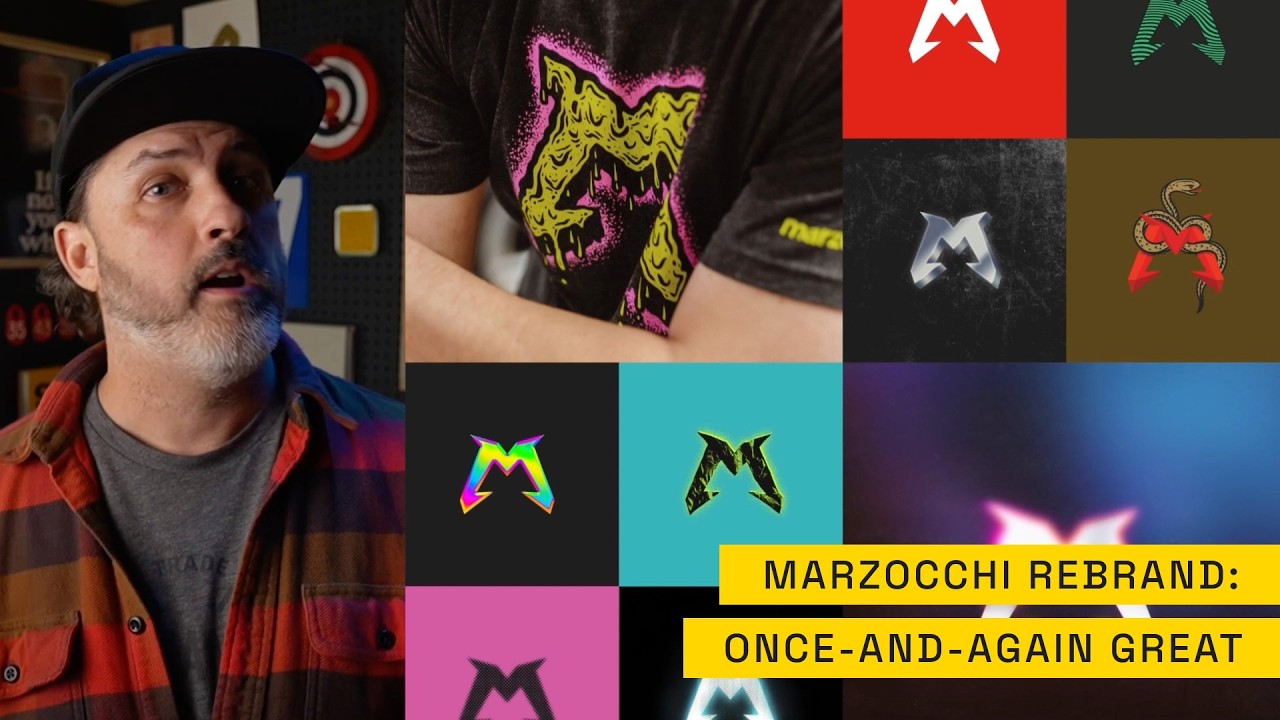
Marzocchi is a good example: Bomber and Uncomplicated describe the product directly (durable, easy to use), while Camaraderic and Stoked focus entirely on the culture around mountain biking.
How to know which side you’re on
Practical attributes are the right call when your category is new, when your product takes explaining, or when a buyer has to understand something before they can evaluate it. They also tend to fit B2B, where the purchase is considered, and the buying committee is skeptical.
Expressive attributes are the right call when everyone already understands what you sell, when the category is crowded, when the product is close to interchangeable, or when you’re competing against your own sibling brands.
Yeah, but our product is actually different.
The trap is assuming your products are the exception. Nearly every company believes its products are distinct enough that describing them counts as differentiating. Some are right. Most aren’t. If your product is a beer in a can in the beer aisle, next to 50,000 other beers in the same-sized can, taking the label off settles the argument fast.
When the mix needs to shift
The right ratio of brand attributes is not set in stone. Markets change, categories mature, and competitive dynamics shift in ways that change what a brand needs from its attributes.

A company entering an emerging category often starts with predominantly practical attributes, because the audience needs education before it needs inspiration. Those practical attributes start to lose their differentiating value as the category grows, competition increases, and the audience catches up. Everyone in the space is now reliable and methodical. That’s when brands need to move along the spectrum, adding expressive attributes that create distinction where the product itself has become table stakes.
You can watch this happen in almost any category that went from novel to crowded in a decade—meal kits, electric vehicles, telehealth. The brands that stayed purely utilitarian faded into the shelf. The ones that developed a point of view found new ways to earn loyalty.
When defining your brand attributes, the right question to ask regularly is simple: given where our market is right now, does our brand need to explain itself, or does it need a stronger personality?
If the answer has changed since the last time you asked, let’s talk.

Introducing private equity to your business can easily create friction. Review six areas that deserve special attention during this critical inflection point.
Download