Why fast food kiosks & apps are ruining customer experience
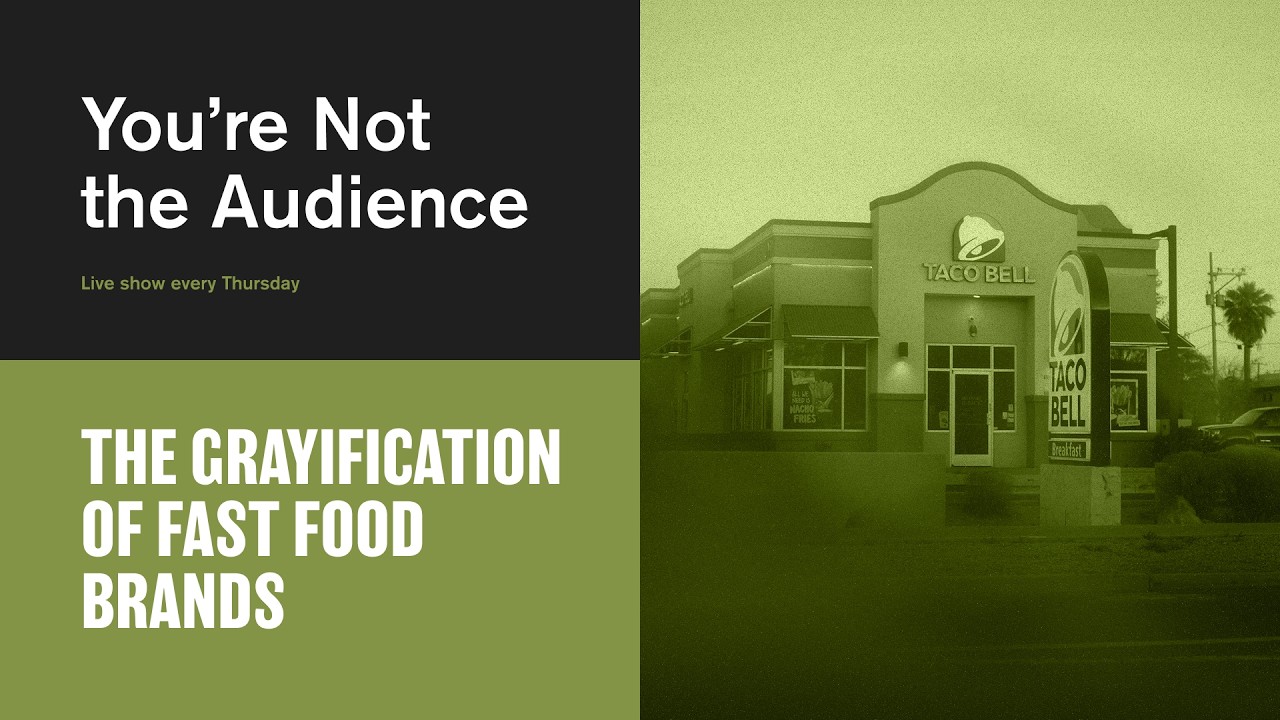
Replacing a person at the counter with a kiosk removes a fast food brand’s most impactful touchpoint. In this clip from You’re Not the Audience, Parliament Creative Director Calvin Ross Carl argues that customer service is the number one way hospitality brands communicate, and that screens and gig-app thinking have turned restaurant employees into factory workers shuffling out food. He also reacts to the Cracker Barrel rebrand backlash and looks back at Taco Bell’s charming history, asking why its stores don’t match the unhinged imagination of its menu. It’s from the You’re Not the Audience episode on fast food brands, The Grayification of Fast Food Brands.
Watch the full episode
Outline
Summary
Calvin Ross Carl argues that fast food brands have lost sight of customer service as a pillar of the brand. In hospitality, service is the number one communication point with a customer. Super Bowl ads and mediocre social media jokes have a fraction of the power of a real person greeting you when you walk in.
Handing that moment to a machine changes the whole dynamic of a restaurant. Employees become factory workers who stand between you and your food, and the charm and humanity disappear. Gig apps like DoorDash and Postmates have changed how people interact with fast food, but Calvin doesn’t understand why a physical space would replicate that same experience when it has a chance to provide joy.
Along the way he reacts to the Cracker Barrel rebrand backlash and revisits Taco Bell’s charming 1980s Arizona Sunset interiors, wishing its stores matched the absurd creativity of its food innovation.
Highlights
Customer service is hospitality’s number one brand touchpoint.
Kiosks remove the shared human experience of being served.
The Cracker Barrel rebrand was an embarrassing dropped ball.
Taco Bell’s food innovation is unhinged, but its stores aren’t.
Key insights
Service is branding
When products are similar across competitors, the human experience of being served is one of the few places to stand out.
Efficiency can strip away humanity
In the hunt for money, boardrooms and brand studios have forgotten that service is essential, and the result is a restaurant with no charm.
Physical spaces should offer joy
Delivery apps have changed fast food, but a store that copies that transactional experience wastes its chance to delight people.
The whole experience should match the brand
Taco Bell’s menu shows real imagination. Calvin argues its stores should carry the same fantasy and absurdity.
Detailed analysis
The clip treats operations as brand decisions. Kiosks and app-first ordering look like efficiency gains on a spreadsheet, but they quietly remove the interactions that build loyalty and leave customers wondering why they should bother going in.
Calvin also notes that many brands are doing interesting things at the fringes, like activations, but those are mostly advertising and rarely make it into the core experience.
Conclusion
For hospitality brands, the people who greet and serve customers are the brand. Removing them in the name of efficiency costs more than it saves.
Transcript
I think one thing that they have all lost sight of on this is just the idea of customer service as a pillar of your brand. So in the hospitality world, whether it’s fast food, restaurants, bars, whatever, customer service is actually your number one communication point and your number one experience with a customer. That is most important. So when you’re giving that up to a machine when you walk in, you’re just removing your most impactful touchpoint. Sure, you can do commercials during the Super Bowl, or you can do your mediocre jokes on social media, but they all just have a fraction of the power of a real person greeting you when you come into your place. So I think just in that kind of bloodthirsty hunt for money, all these boardrooms and the brand studios that are working for them have forgotten that service is an essential part of that. Service is an essential part for all hospitality brands, and especially when you’re creating a lot of the same types of products.
Oh yeah, Gab says here, “Keep thinking about how Cracker Barrel tried to scrape off all the illustrations from their menus, but then their fans lost their shit until Cracker Barrel brought it back.” Oh God. Yeah, that Cracker Barrel rebrand. Normally I don’t love this world of design commentary about specific brand things like that, and the way that they blow up to be a fervor. A lot of the time it’s fine, and we don’t understand the reasons or the decisions that got them there. I mean, I know I’ve definitely worked on brands where there’s probably a lot of decisions that I’ve made that customers don’t understand, but eventually they do. But dang, that Cracker Barrel one was just an embarrassing dropping of a ball there.
So yeah, customer service as branding. I think that’s super important. And I think there’s also just something where they have taken that a little too far. The problem with it is it just creates an interesting dynamic in the restaurants too, where you’re no longer being served by the people who work there. You’re no longer getting this shared human experience. Instead, this just turns all the employees there into just factory workers shuffling out food for you. So that becomes your only relationship to the humans that are there: they are the thing that stands between you and your food, not the people who are actually making this and giving it to you and ensuring that you had a nice time. So there’s no charm, no humanity. And so then that begs the question of, why even bother going?
And a lot of this has also been changed because of the way we use various gig apps, like DoorDash, Postmates, all those things. I think that’s dramatically changed the way that we interact with a lot of fast food. But I don’t understand why, in your actual physical space, you would almost replicate that exact same experience when you have a chance to provide joy. Okay, that’s a lot of talking about this stuff.
Is there anyone out there—anyone in chat—who do you think’s doing some good stuff right now in the fast food space? Let’s talk about a few good things. I need a little bit of joy after all of this. Because, I mean, the one that still bums me out the most, honestly, in all of this, is Taco Bell. Because, I mean, look at all this stuff. Taco Bell has had such a great, beautiful history. This is all—this guy, what’s his name? Rolando does all of these posts about classic old places. He also did the Pizza Hut one, and he did this Taco Bell one. And this just breaks my heart, because there’s so much charm embedded in everything until the last, you know, 10 to 20 years.
And I think it’s also the fact that Taco Bell’s food innovation is insane. Absolutely unhinged, in a way that I think no other fast food company is willing to go for. So their brand has become absurd food creation, which I think is actually great. So why doesn’t the rest of their brand experience, their store experience—why doesn’t that match that same level of imagination and fantasy and absurdity?
Yeah, these are great. See, this is where I pulled photos from. Just look at these. Arizona sunset. I want my house to look like this. Sorry, Sarah. We’re redecorating our house. It’s going to look like a 1980s Taco Bell.
Yeah, There’s No Need To says McDonald’s is doing good stuff with activation experiences. I think it’s probably right. I think that is the hard part about this: these brands are maybe doing interesting things on the fringes of their brand, but it’s mostly an advertising-related thing, and they aren’t bringing it into the core of their brand.