Why modern brands need worldbuilding, not just brand building
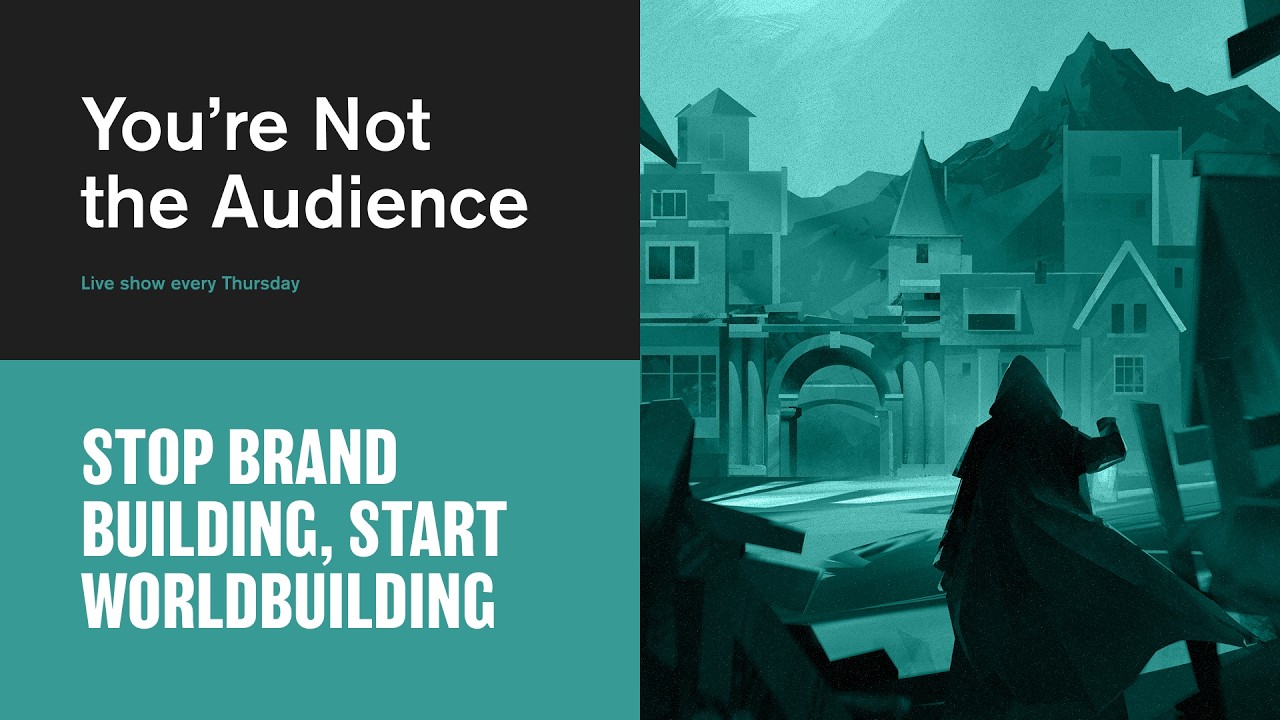
Many companies treat a rebrand as a refresh: tighter identity, new messaging, a cleaner collection of assets. In this clip from You’re Not the Audience, Parliament Creative Director Calvin Ross Carl makes the case for something bigger, creating worlds that fans can inhabit and explore. He defines worldbuilding as going beyond the basics to establish history, lore, characters, symbols, stories, and places with a logic unique to the brand, and points to McDonald’s, Harley, and Patagonia as brands that do it well. It’s from the You’re Not the Audience episode on worldbuilding, Stop Brand Building, Start Worldbuilding.
Watch the full episode
Outline
Summary
Calvin Ross Carl explains the thinking behind the episode’s title. Many brands that come to Parliament expect a refresh, with a tighter identity and new messaging, but he sees a much bigger opportunity in creating worlds for fans to inhabit and explore. McDonald’s, with characters like the Hamburglar and Grimace, is an example of a brand going far beyond a standard collection of assets.
He defines worldbuilding as going beyond the basics of a brand to establish history, lore, characters, symbols, stories, and places, all following a logic that applies only to that brand’s world. Harley embodies its rebel outlaw spirit, and Patagonia uses the language of outdoor gear to tell a story about saving the world one jacket and one climb at a time. A viewer’s mention of Diablo prompts Calvin to praise its deep well of lore and committed occult imagery.
Highlights
A rebrand can be more than a refresh of identity and messaging.
McDonald’s built a world of characters beyond its core assets.
Worldbuilding includes history, lore, characters, symbols, stories, and places.
A brand world needs a logic unique to that brand.
Patagonia tells a world-saving story through outdoor gear.
Key insights
Assets aren’t a world
Logos, colors, and messaging are the starting point. The brands people obsess over add layers fans can dig into.
Worlds invite emergent stories
When a brand becomes an environment, fans can discover narratives on their own and fall in love with it on a deeper level.
The product is the language, not the story
Patagonia makes jackets, but its world is about saving the planet. The product is how the story gets told.
Detailed analysis
This clip opens the episode by reframing the brief. Instead of asking how to tighten up an identity, Calvin asks what world a brand could build. That shift matters because worlds create room for characters, lore, and discovery, the elements that turn customers into fans.
The examples span fast food, motorcycles, and outdoor gear, showing that worldbuilding isn’t limited to entertainment. Any brand with a clear internal logic can develop a world, and Calvin notes that the rules governing those worlds will come up later in the episode.
Conclusion
Brand building produces assets; worldbuilding produces places people want to explore. Calvin’s challenge is to think of brands as environments with their own history, characters, and logic.
Transcript
So, okay, let’s talk about why I did the very clickbaity title of this episode, Stop Brand Building, Start Worldbuilding. We have this idea that brands just need this certain collection of assets.
Oh, Sarah asked, video games or board games? Both. We’re going to talk about both. We’ll probably talk more about video games, because I think that’s just what people understand more. I don’t need to drag you down into my world, but we will talk about Warhammer for a second, so there will be some nerdy tabletop game stuff going on here. Yeah, with video games, my brain immediately goes to Zelda, Skyrim, all of those kinds of games. I’ll talk about some of those in here.
Okay. So I think a lot of brands, especially in our world, when people come to us at Parliament, think it’s just a refresh, in the sense of, oh, we’re tightening things up, new identity, new messaging. But I think there’s a really big opportunity for not just creating brands with better identities, but actually creating worlds for their fans to inhabit and explore.
A couple of weeks ago, we talked about fast food brands, and McDonald’s is an incredible example of this, where they have this whole world of characters like the Hamburglar and Grimace. That is them going beyond just the normal collection of assets and strategy that you have for a brand and completely developing a whole world on it. So I want to start thinking about brands not just as that collection of stuff and assets and logos and colors and messaging, but as worlds and environments that we can actually really dig into, discover emergent narratives in, and fall in love with on a really deep level.
So, yeah, let’s just start with a basic: what is worldbuilding? So we all have a shared meaning of this. Worldbuilding is when you go beyond the basics of a brand. And this is good, because the brands people obsess over build these really deep worlds. I mentioned McDonald’s. You think of Harley, the way Harley really embodies this rebel outlaw spirit. All of these are doing worldbuilding that establishes history, lore, characters, symbols, stories, places, and they all have a logic that applies only to their unique brand world. And I think that’s the really important thing: when it’s contained in this world, it is uniquely this. It doesn’t go against those rules. And we’ll talk about rules and all those things more later.
So I talked about McDonald’s. There are other brands that are really great at worldbuilding. For example, when you think of Patagonia—Patagonia is always a great example. Patagonia just makes outdoor gear, but the world they’re creating is all about saving the world one jacket at a time, one mountain climb at a time. It is actually about all of those things, and it just happens that it’s through the language of outdoor gear. So they have done a great job of establishing this really big world.
Oh, Sarah said Diablo for video games. Diablo is incredible. It’s such a good example of a game where there’s some linear narrative, but then there is just this deep, vast well of stuff to discover. And everything is always committed to this incredible occult religious imagery. Oh yeah, Diablo is great. Maybe I’ll pull up some Diablo images in a little bit.