Stop brand building, start worldbuilding
In this live episode of You’re Not the Audience, Parliament Creative Director Calvin argues that the strongest brands don’t just assemble logos, colors, and messaging—they build worlds their fans want to inhabit and explore. Drawing on the worldbuilding behind video games and tabletop games—Skyrim, Warhammer 40,000, Wingspan, Destiny—and brands like McDonald’s, Patagonia, Harley-Davidson, Liquid Death, and Parliament’s own work with Rainier Beer, Calvin shows how heritage, lore, internal rules, characters, and emergent storytelling turn casual customers into hardcore fans. The throughline is the show’s namesake idea: you’re not the audience, and the more specific and self-contained your world becomes, the more valuable it is to the people it’s actually for.
Relevant case studies

Outline
Summary
In this episode of You’re Not the Audience, Parliament Creative Director Calvin makes the case for a shift in how brands think about themselves: away from the standard “collection of assets” model—logos, colors, messaging, a refreshed identity—and toward worldbuilding, the practice of creating a deep, internally consistent world that fans can inhabit, explore, and fall in love with. Parliament is a brand transformation agency that helps companies through moments of major change using strategy, positioning, identity, and messaging, and Calvin frames worldbuilding as the next level beyond a conventional rebrand.
After opening with personal and studio obsessions—designing swag for Parliament’s Catty Shack Invitational golf tournament with illustrator Brett Parson, a birthday gift of the Wipeout graphic archives designed by the Designers Republic, and the sci-fi game Marathon—Calvin grounds the idea in the work of Richard Bartle, whose book Designing Virtual Worlds reframed video games as social environments. Bartle’s four player types (achievers, explorers, socializers, and killers) map neatly onto the twelve brand archetypes Parliament uses, and both serve the same purpose: helping a brand decide who it is for and, just as importantly, who it is not for.
The core mechanics of worldbuilding, Calvin explains, are emergent narrative and strict internal logic. Emergent narrative is non-linear storytelling discovered through interaction rather than delivered in a straight line—the book you pick up in Skyrim, the riddle under a Rainier bottle cap, the unexpected moment of joy in an app’s onboarding. The most memorable brand moments are the ones customers discover for themselves. But emergent discovery only works if the world has rules that are never broken: Harley-Davidson always speaks as the outlaw, Liquid Death is always about murdering your thirst, and Rainier’s world always revolves around Mount Rainier. Mixing in a contradictory archetype—an outlaw that also wants to be a caretaker—causes the world, and the audience’s understanding of it, to collapse. He points to Bob’s Red Mill’s removal of its founder illustration as a cautionary example of breaking a world’s established rules.
Calvin then studies several game worlds for transferable lessons: Skyrim’s reward for going one level deeper at every turn; Warhammer 40,000’s self-serious “grimdark” satire of endless war; Wingspan’s ability to turn casual players into passionate birders through hyper-specific real-world detail; and Destiny, whose lore is so deep it has become nearly impenetrable to newcomers—an example of worldbuilding taken too far. The common thread is that these worlds don’t ask “what audience are we trying to reach”; they ask “what kind of place does our audience want to exist within.”
He closes with practical guidance for brands: stop thinking of your brand as a collection of assets and start thinking of it as placemaking; describe a world where only your brand exists; build histories, stories, and lore (often starting from a founder story); and create characters and mascots that carry the brand’s voice. Because learning is fun and discovery builds loyalty, every layer of detail is an invitation to become a hardcore fan—and the more specific the world, the stronger and more valuable it becomes.
Highlights
Brands don’t need better identities—they need better worlds: environments fans can inhabit, explore, and fall in love with, not just a collection of logos, colors, and messaging.
Richard Bartle’s four player types (achievers, explorers, socializers, killers) map onto the twelve brand archetypes Parliament uses to define who a brand is—and isn’t—for.
Emergent, non-linear storytelling creates a brand’s most memorable moments because customers discover them for themselves, from Skyrim’s in-game books to riddles under Rainier bottle caps.
Strong worlds run on strict internal rules that are never broken—Harley is always the outlaw, Liquid Death always murders your thirst, Rainier always revolves around Mount Rainier.
Game worlds studied for brand lessons: Skyrim, Warhammer 40,000, Wingspan, Destiny, Cyberpunk, Bioshock, Mass Effect, Marathon, and Wipeout.
Worldbuilding can go too far: Destiny’s lore became so deep it’s now nearly impenetrable to newcomers—a warning about over-investing in inaccessible detail.
The practical shift for brands: stop thinking in assets, start thinking in placemaking, lore, characters, and mascots—and get more specific, because the narrower the world, the stronger the fandom.
Key Insights
Brands as Worlds, Not Asset Collections
Most companies, especially those seeking a rebrand, think of branding as tightening up a collection of assets—a new identity, refreshed messaging, updated colors. Calvin argues the bigger opportunity is to build a world fans can inhabit. McDonald’s does this with a cast of characters like the Hamburglar and Grimace; Patagonia does it by making outdoor gear the language of a much larger story about saving the planet one jacket at a time. The shift is from seeing a brand as stuff—logos, colors, messaging—to seeing it as an environment with history, lore, characters, symbols, and places that operate by their own internal logic.
Richard Bartle and the Four Player Types
Worldbuilding’s intellectual foundation comes from game designer Richard Bartle, whose book Designing Virtual Worlds reframed games as social environments inhabited by people and produced the first psychographic personas for gaming. Bartle’s four player types—achievers (goals and achievements), explorers (discovery and secrets), socializers (community and relationships), and killers (competition and conflict)—parallel the twelve brand archetypes Parliament works with, like Nike as the hero or Harley as the outlaw. Both frameworks are less about demographics than about emotional behavior, and both help a brand commit to a specific identity that audiences can adopt as their own.
Emergent Narrative Beats Linear Funnels
Worldbuilding relies on emergent narrative: storytelling that unfolds through interaction rather than following a fixed plot. This mirrors how people actually encounter brands today—through scattered, non-linear touchpoints rather than a tidy marketing funnel. The payoff is that self-discovered details become a brand’s most powerful moments: a lore book picked up in Skyrim, a riddle printed under a Rainier bottle cap (a trick Snapple also used), or an unexpected moment of delight inside an app’s onboarding. Because the customer finds these moments themselves, they land harder than anything pushed at them.
Internal Rules and Logic (and Never Breaking Them)
A world only works if it has strict internal rules that are consistently honored. Rainier’s world always happens on Mount Rainier, with its wild Rainiers, the wizard Kand the Gold, and the beer barbarian who fights the yeti; anything off-world is excluded. Harley always speaks from the outlaw mindset because it sells freedom and rebellion, not just motorcycles. Liquid Death has built an absurd but airtight world about murdering your thirst with cartoonish violence and heavy-metal attitude—an impure world for a pure product. The danger comes when brands try to blend contradictory archetypes (an outlaw that also wants to be a caretaker) or strip away signature elements, as with Bob’s Red Mill removing its founder illustration—choices that break the rules and dissolve the brand’s identity.
Lore, Heritage, and the Founder Story
You can’t simply announce a world’s rules; you communicate them through lore, history, and heritage. A strong founding story gives a brand a deep truth it can always return to. Calvin cites Parliament’s work for Just Food for Dogs, whose founder began cooking fresh food at home for a rescue dog that wouldn’t eat—a story that now anchors everything the company does around fresh, lightly cooked food. Lore is the renewable well brands draw from, even when they don’t consciously realize that’s what they’re doing.
Hyper-Specific Detail as an Invitation to Fandom
Going one level deeper on every element is an invitation to become a hardcore fan. Wingspan, a bird-themed board game, enforces strict real-world accuracy—actual measurements, real behaviors, and a charming fact on every card—and in doing so turns casual players into enthusiastic birders. The game is almost secondary to the joy of exploring a world the player knew nothing about. The lesson for brands: layers of authentic detail give people knowledge to dig into, and learning itself is fun, so each detail is a hook that turns curiosity into belonging.
The Downside: Worlds Can Get Too Deep
Worldbuilding has a failure mode. Destiny’s lore is so vast—a story for every planet and character, accreted over years—that it has become nearly impenetrable to newcomers who don’t know where to begin. At that point the world only serves the most committed explorer-types and turns everyone else away. The caution is that depth is powerful only as long as there’s still a way in; a world can become so dense that it stops inviting new fans.
Detailed Analysis
The episode’s strength is in how Calvin uses game worlds as working models rather than mere analogies. Skyrim demonstrates the power of always going one level deeper: a player crests a hill and glimpses a tower or town with its own architecture, language, and culture, and that single moment of “I don’t understand this yet” pulls them into discovery. Warhammer 40,000 shows that a world can be built on a strong point of view—a satirical, self-serious vision of endless war and religious fanaticism, captured in its “in the grim darkness of the far future, there is only war” tagline and John Blanche’s defining artwork—so distinctive that people fall in love with the world even if they never play the game. Wingspan proves that hyper-specific, accurate detail can become the entire point, converting players into birders almost as a side effect.
Each of these maps cleanly onto consumer brands. Harley-Davidson’s outlaw posture, expressed in decades of “live by it” advertising that always defines itself against something, is the brand equivalent of a tightly enforced game world. Liquid Death’s commitment to a cartoonishly violent, anti-water world is a masterclass in internal logic—break it with a “pure artisanal spring water” message and the whole thing falls apart. Rainier’s mythic Mount Rainier universe, complete with characters and recurring lore, is Parliament’s own demonstration that an ordinary American lager can become an aspirational world. And Bob’s Red Mill stands as the counterexample: remove the founder who embodied the world’s heritage and a meaningful brand starts to look like a generic consumer good.
The Destiny discussion adds necessary nuance. Deep lore and emergent storytelling are assets right up until accumulated detail becomes a barrier to entry. This tension—depth versus accessibility—is the practical question brands face when they commit to worldbuilding: how to keep rewarding the explorer without locking out the newcomer.
Calvin’s closing translation to practice reframes branding as placemaking. Rather than asking which audience to target, brands should ask what kind of place their audience wants to exist within, then describe a world where only their brand exists, build out its histories and characters, and lean into subcultures, rituals, and symbols. He predicts (and hopes for) a new era of brand mascots, and notes that voice and character can do the same work as a mascot. His brief aside on AI—a worry that worldbuilding depends on human passion for the underlying reasons things exist—signals where he sees the practice being tested next.
Conclusion
The central argument is simple and demanding: stop building brands as collections of assets and start building worlds. Worlds run on emergent storytelling, strict internal rules, lore and heritage, and hyper-specific detail—and they reward the people willing to go deeper with a sense of identity and belonging. Done well, worldbuilding converts a brand from something people buy into something people inhabit.
The deliberate trade-off is exclusivity. A world built for everyone is a world for no one; the more specific and self-consistent it becomes, the more powerful it is for a focused group of fanatics—and, eventually, the more valuable it is overall. As the show’s title insists, you’re not the audience, and the brands that internalize that are the ones that build worlds worth living in.
Transcript
Hey everybody, welcome to You’re Not the Audience. This is a weekly live show where I break down brands, products, and subcultures that stand out by not appealing to everyone. I’m Calvin, the creative director at Parliament. Parliament is a brand transformation agency that helps brands when we’re facing big changes, and we help them get to that next version of themselves by doing strategy, positioning, identity, and messaging—all those things.
Today’s going to be a very fun episode. Well, I hope they’re all fun episodes, but this one is uniquely in my wheelhouse of nerdery. Today we’re going to be talking about what brands can learn from the worldbuilding that video games and tabletop games can do. Those worlds are just great at developing these deep stories and narratives that are worth discovering, and I think you can bring a lot of that stuff back to the brand world. How’s everybody doing today? Is everybody ready to talk about some game stuff—start going back and remembering all your favorite old games you used to play?
So, structure for the episode. I’ll start by talking about some Parliament news and recent obsessions, things I’ve been really loving, and then we’ll get into the topic. I’ve got a lot to get through today, so it’s going to be a beefy one.
Let’s talk some fun Parliament stuff while we get going. I think I mentioned this last week—we’re planning our annual golf tournament, even though we’re terrible at golf, except for Nick on our crew. He’s maybe the good golfer. Last year we designed a bunch of swag using this little rabbit; it’s called the Catty Shack Invitational. The fun part is, this year we really love this little rabbit—it’s pulled from some old vintage ad illustrations—but this year we hired our friend Brett Parson to do his version of it. We’ve worked with him on some secret projects I can’t talk about yet, but we found him and we really love his work. He’s got this really fun, expressive style. He’s known for the new versions of Tank Girl, those comics, and his own comic series called Grommets—just really good, cool, expressive style. So we’re having him reimagine our hare for the Catty Shack. That’s one of the new things I’m really excited about, getting to design some swag for that.
The other one—this is actually a great start. I recently had my birthday, and my friend bought me this book called Wipeout: The Graphic Archives. For anyone who knows, Wipeout was a racing video game from 1995 on the PlayStation, and this whole identity was designed by a group called the Designers Republic. They were really known for that kind of UK rave design thing that’s now all come back, and this book is just incredible. They did the most deep worldbuilding, identity, and branding. This is what the game looked like, but then they did all of these completely exhaustive brand identities for all the corporations in the game. It’s maybe one of the deepest, most impressive uses of graphic design in any video game. I have a feeling I might want to do a whole episode talking about the Designers Republic and Wipeout. I’ve been obsessed—it’s so cool, very inspiring to dig through.
And then, very related to today: I am obsessed with this game called Marathon, another kind of sci-fi game. It’s by the people who made Halo and Destiny, but they went so deep—every single group has its own little logos, there are different factions, they went very deep on the story. There’s tons of hidden design and amazing brand stuff everywhere inside the game. They are absolutely bonkers. I’ve just been thinking a lot about how design and branding extends into all these different worlds.
So let’s get into it. Chat, drop some of your big favorite games that you think have interesting worldbuilding, some kind of story going on that’s interesting—drop them in chat and we can talk about them as we go.
Okay, let’s talk about why I gave this episode the very clickbaity title “Stop Brand Building, Start Worldbuilding.” We have this idea that brands just need a certain collection of assets. (Sarah asks, “Video games or board games?” Both. We’re going to talk about both—probably more video games, because that’s what people understand more, but we will talk about Warhammer for a second, so there will be some nerdy tabletop stuff too. My brain immediately goes to Zelda, Skyrim, all those kinds of games.)
A lot of brands think that, especially in our world—when people come to us at Parliament, they think it’s just a refresh, like, “Oh, we’re tightening things up, new identity, new messaging.” What they miss is that there’s a really big opportunity not just for creating brands with better identities, but for actually creating worlds for their fans to inhabit and explore. We talked a couple of weeks ago about fast food brands, and McDonald’s is an incredible example—they have this whole world of characters like the Hamburglar and Grimace. That’s them going beyond the normal collection of assets and strategy and completely developing a whole world. So I want to start thinking about brands not just as that collection of stuff—assets, logos, colors, messaging—but as worlds and environments we can actually dig into, discover emergent narratives in, and fall in love with on a really deep level.
Let’s start with the basics: what is worldbuilding, so we have a shared meaning. Worldbuilding is when you go beyond the basics of a brand. The brands people obsess over build these really deep worlds. Think of McDonald’s, or the way Harley really embodies this rebel outlaw spirit. All of these things are doing worldbuilding that establishes history, lore, characters, symbols, stories, and places, and they all have a logic that applies only to their unique brand world. That’s the important thing: when it’s contained in this world, it is uniquely this; it doesn’t go against those rules. We’ll talk about rules more later.
There are other brands that are really great at worldbuilding. Patagonia is always a great example—Patagonia just makes outdoor gear, but the world they’re creating is all about saving the world one jacket at a time, one mountain climb at a time. It just happens to be through the language of outdoor gear. (Sarah said Diablo for video games. Diablo is incredible—such a good example of a game where there’s some linear narrative, but then a deep, vast well of stuff to discover, and everything is committed to this incredible occult religious imagery.)
Worldbuilding comes from an idea originally established by a guy named Richard Bartle. He wrote a book called Designing Virtual Worlds, which established video games not just as games but as social environments inhabited by people. He wrote a lot about MMO games like early Warcraft, and he defined a lot of the language we use now when we talk about targeting audiences. He was a game designer and writer who was one of the first to look at games through a sociological lens, and he developed the first psychographic personas for gaming—which, at Parliament, we develop for every client. Those are personas that are less about demographics and more about emotional behaviors.
He broke players down into four types. Achievers are people who like goals and achievements. Explorers are into discovery and uncovering secrets. Socializers are seeking community, friendship, and relationships in their games. And killers seek competition and specifically conflict with others. The strongest game worlds tend to support multiple aspects of these but usually focus heavily on one. This corresponds to the way we think about brand archetypes in branding—a similar way of bucketing people, a little more focused. There are twelve brand archetypes we usually align with: the idea that Nike is the hero, Harley is always the outlaw, things like that. They give us a language to know who we’re targeting and who we’re not. The really important thing about focusing on those, especially in worldbuilding, is that by focusing in on all these specific niches, you allow players and audiences to create an identity within your world. Identity is really important when playing a game or giving yourself over to a brand, because people develop different personas when they’re in a game or using a product they really like. (Sarah says, “I love the branding for all the Blizzard games and how cohesive they are, even with different styles.” Yeah, Blizzard are absolute masters at creating game worlds—Diablo, Warcraft—everything super consistent, really over the top, and they’re great at storytelling.)
Speaking of storytelling, one thing Bartle also talks about is that worldbuilding relies on emergent narrative. Emergent narrative is something we do with brands all the time; we just don’t think of it that way. It’s a storytelling approach where the plot and the lore aren’t linear—the story unfolds naturally as you interact with the world you’ve created. This is how brands communicate all the time when we think about advertising and social. Nobody approaches your brand in a straight line from here to there. A lot of marketing people try to funnel people that way, but the internet has blown all of that up. Now everyone discovers brands and products through incredibly disconnected ways, and those are all chances to communicate a little bit of storytelling. It doesn’t have to be linear.
Some simple examples: when you’re playing Skyrim, a big, beautiful role-playing game, you walk around these worlds and you pick up a book in the game, open it, and read it, and it tells you all this lore about some historical event that happened hundreds of years ago. That’s not necessary for the linear plot, but it gives you something to explore and go deeper into. One I love on the brand side: Rainier Beer’s 12-ounce bottles have a little riddle on the underside of the cap when you pop the top. Snapple was also known for doing this. Those are just a little moment of surprise under every cap, and it builds this world without you even realizing it, because it’s a little moment of joy in an unexpected place. You also see this in digital product design—you’re using a website or app and there’s some onboarding, and rather than just giving you the boring “do this, then do this,” they insert some small, unexpected, fun moment.
The reason emergent storytelling is so powerful is that these become the most memorable moments a brand can have, because we discovered them ourselves. When you discover some small nuance about a thing yourself, that is the most impactful moment you can have.
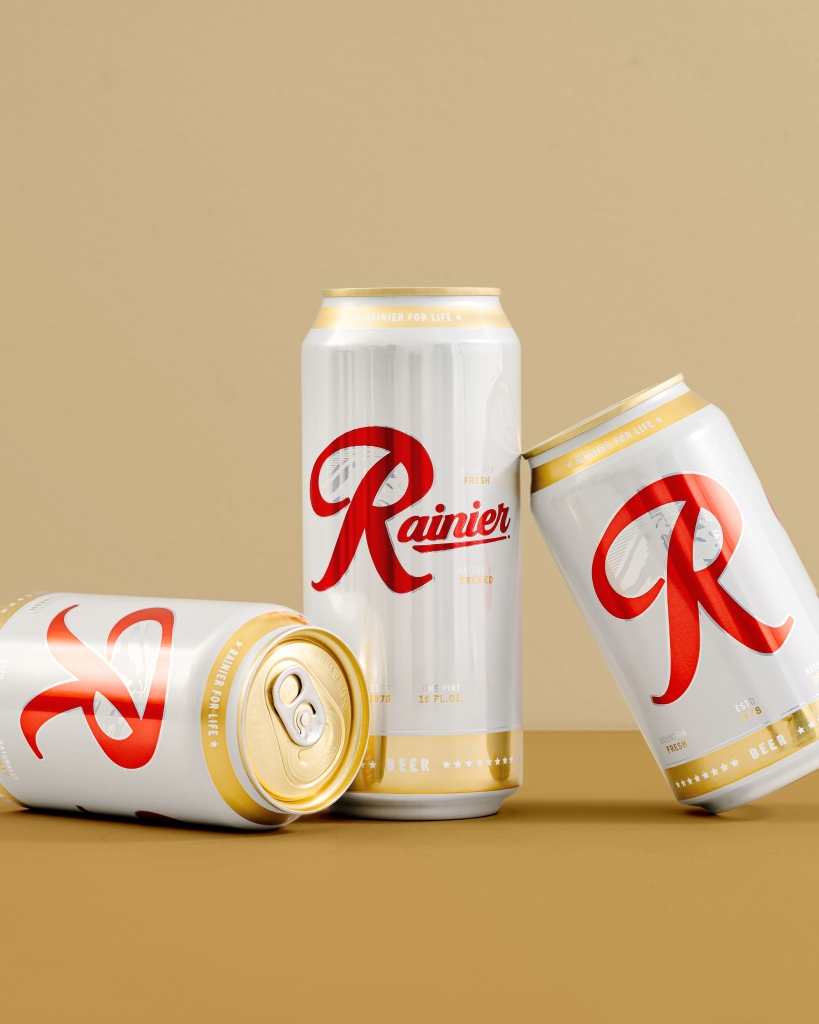
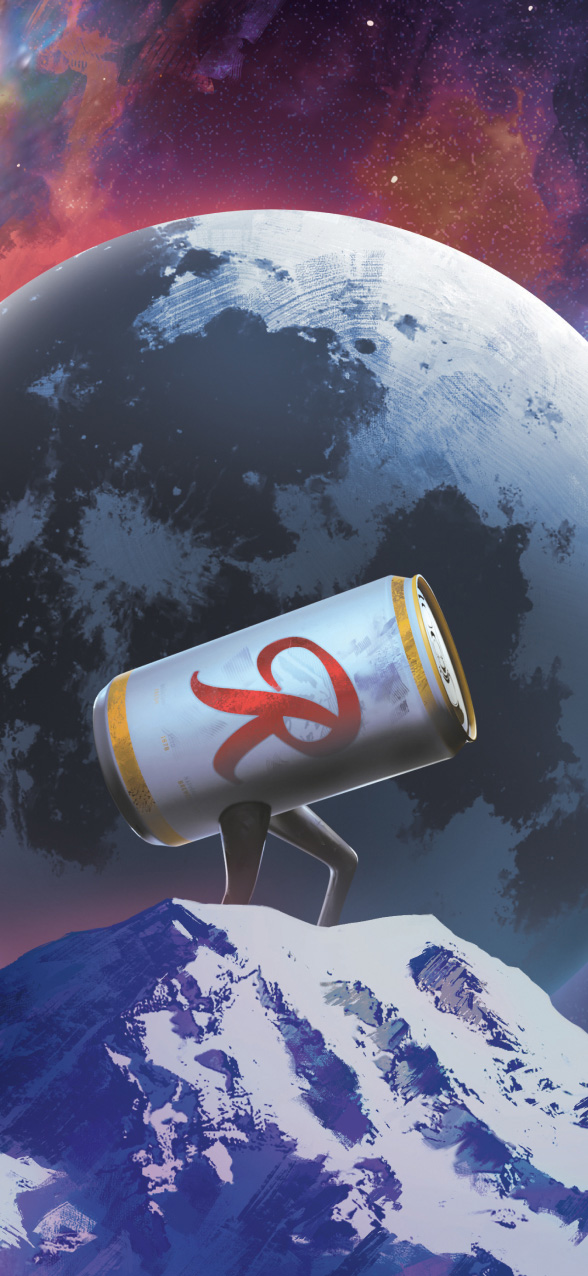
In order for that storytelling to work, though, you have to build really strict internal rules and logic for your world. Like the rest of your identity, this worldbuilding requires rules and guidelines. Rainier Beer has the rule that everything happens on Mount Rainier. There are the wild Rainiers, the little bottles with legs that run around. There’s Kand the Gold, the wizard who rules over the mountain. There’s the beer barbarian who fights the yeti on the mountain. The world is always absorbed with that; anything against it doesn’t get included. Sometimes these rules your brand just discovers over time, because that’s what happens with emergent storytelling—it gets absorbed into the canon of a brand. For example, Harley’s internal rules and logic: Harley always speaks from the mindset of the rebel or outlaw archetype. Harley’s not about bikes—the bikes are just the product at the end of it. Harley is really about fighting against the status quo, fighting against your nine-to-five job, finding freedom on the weekend when you can. You might have a desk job, but you can be a biker. When you tell someone they can be a biker, their mind lights up; they imagine this whole other alter ego they can’t have in their normal life. That’s the powerful part of Harley. These are classic old Harley ads—some of the writing is really good. This one’s for an air freshener, and the tagline for the whole campaign is just “live by it.” The writing is always opposed to something. You always have to be up against something, and that’s part of their world.
The other one I want to talk about—because we drink too much of this around the office—is Liquid Death. Liquid Death has established the most absurd rules for their brand. (This is a page from our friends over at Lincoln Design, just outside of Portland—an illustration-heavy design agency that does work for Liquid Death.) Liquid Death isn’t about water; it has almost nothing to do with water. Liquid Death is about murdering your thirst and everything that comes along with that. Every detail needs to communicate that your thirst is an opponent that must be murdered, with a cartoonish amount of violence and heavy-metal attitude, and it must always abide by those rules. If Liquid Death suddenly put out a product trying to be some beautiful artisanal spring water that’s so pure and natural, it would not work—everyone would hate it. Liquid Death is impure; they’ve created an impure world for a pure product. The benefit of these rules and this logic is that you instantly know what belongs in the world and what doesn’t, and therefore you instantly attract people who really identify with it. (This is Designing Virtual Worlds, the Richard Bartle book—any cover that looks like this is going to be a dry read, but a very informative one.)
So that’s another important thing: you have to define your own rules and logic, and then never break them. We run into this with clients all the time, especially when we’re talking about archetypes. They say, “Yeah, I want to be an outlaw, but sometimes I need to be nice and caring, so maybe I need to be a sage or a caretaker archetype.” As soon as you mix those, it defies everything your brand stands for, breaks all the internal rules and logic, and your brand starts to fall apart—people don’t know who you are anymore. If you’re Liquid Death, it’s always about cartoonish violence and murdering thirst. That’s it. (Sarah says, “You mix those, you become an abusive ex-boyfriend.” Yeah—the outlaw caretaker, that’s the bad ex-boyfriend vibes.)
Are there any other brands people think of that are really good at this? I just saw Bob’s Red Mill did a rebrand, and everyone who knows Bob’s Red Mill is upset because they removed the illustration of Bob, the original owner and founder, from the packaging. Everyone’s upset because that’s breaking the rules of the world they established—Bob’s Red Mill makes grains, flour, stuff you buy at the store—and just by removing that thing, they’ve broken every rule. Now it just looks like a generic consumer good, and they were so good and meaningful before that. I’m curious to see how the new rebrand does. (Doing some googling on the fly here. So this is the initial Bob’s Red Mill on the left; the one on the right is “RIP Bob.” They’re playing with what everyone thinks of with Bob’s Red Mill—made by this quaint old mill outside of Portland, Oregon, founded by this one guy. It’ll be interesting to see where it goes.)
When you’re creating rules like this for worldbuilding, you can’t communicate them by saying, “Hey, we only do this.” You can only do it through lore, stories, and history—that’s the heritage of your company. Lore is what creates the rules and meaning in your world. Every great game world has stories, lore, history, legends, shared experiences we can relate to or aspire to. When brands fail to take advantage of their lore and heritage, you get something like the Bob’s Red Mill example—you start throwing away a lot of brand equity.
A lot of brands, it’s really important for them to have a strong founding story or a story from their founder, because that gives us a deep truth we can fall back on: the company was founded because of this, and therefore this is our viewpoint forever. We just did work for Just Food for Dogs, a dog food company, and their whole founding story was about their owner rescuing a dog that was in bad shape and wouldn’t eat anything, so he started making food at home for it. That fueled the future of the whole company—it’s always about nothing but fresh food, lightly cooked, for dogs. Everything goes back to that story, and you hear it come up whenever they reference some belief that comes out of it.
Let’s talk about some games we can learn things from. The first one is maybe what comes to mind for everybody when they think of deep world story: Skyrim. It’s been out for years; it’s part of a series called Elder Scrolls, known for vast worlds filled with tons of different towns in a fantasy medieval setting with dragons and all this stuff. At first it seems like a generic fantasy video game—a Viking-ish town, we get it. But then you can climb a hill and see so far into the distance that you might spot a tower that looks nothing like the ones nearby. You go to a town and it has a completely different language, a completely different culture; the buildings look different. Even though it just took you a few minutes to walk over there, it immediately transports you into a world where you don’t fully understand everything, and you have to discover the secrets of this small town versus the one you were just in. There are tons of people to interact with, and it lets you go deep and discover foreign ideas and places you don’t understand yet. That entices you in. (I had to pull up the classic meme: “I used to be an adventurer like you—then I took an arrow in the knee.” That’s only for the real Skyrim nerds.) It’s such a strong example of how doubling down at every chance to go one level deeper with your story is really powerful.
The next one is an incredible example: Warhammer 40,000, a massive tabletop war game. It looks like this on the table—tons of little miniatures you move around in a big combat game. Part of the fun is painting the miniatures. It’s massively popular. But why has something like Warhammer been so good? Because they developed an incredibly deep world where there are planets everywhere filled with different races of people and cultures, and it’s actually a really deep, cynical, satirical viewpoint on endless war and religious fanaticism. This is the first box from 30 or 40 years ago, the first edition of Warhammer 40K, and even this tagline—“in the grim darkness of the far future, there is only war”—is so self-serious that it’s actually funny, and it becomes this unique twist. The funny thing is I don’t really like the game, but its world is absolutely incredible, and the art—rest in peace, John Blanche, the artist who created all of this artwork and defined the look of Warhammer; he just died—is unbelievable work. It’s a world where not only is there a character, but they’re part of a whole culture with a completely different set of beliefs, and it keeps going deeper and deeper.
The last one is interesting in a different way: a board game called Wingspan. It does worldbuilding completely differently from those other ones, which were about creating deeper layers of story and lore. Wingspan is a really popular card and board game—for a lot of people it’s kind of replaced Catan. Catan doesn’t have very deep worldbuilding; you’re just a farmer. What Wingspan does very well is invite you to gain knowledge about something you might not know much about. It hits that achiever mindset of learning things, plus a bit of exploration through discovering facts. They’re incredibly strict that every bird in the game is real—you’re creating habitats for your birds and putting eggs on them, and it’s all very cute and charming, but there are actual measurements of the animals’ size, and every effect relates to the real animal. Each card has a charming little fact—for example, “orioles weave pouch nests that hang from a tree branch”—and it shows you where that bird is located in the world. It does an amazing job of turning everyone who plays into a bit of a birder, which is a thing I never thought I was interested in. As soon as I’m playing, I want to read every single fact. The game itself is perfectly serviceable—a step up from Catan—but what sets it apart is that it brings you along on this journey of becoming a bird nerd. The game is almost secondary to the joy of exploring a world of birds you knew nothing about.
If there’s one thing to take from looking at all of these games, it’s that going into hyper-detail on a lot of different elements is a big invitation—not just to play a game or become a fan of a brand, but permission to become a hardcore fan, because it gives you all this deep knowledge to learn about. The interesting thing about Warhammer, Wingspan, and what good brands do is that none of them are really asking the most basic question we start with for brands: “What audience are we trying to reach?” It’s not about targeting a specific demographic. They’re asking, “What kind of place does our audience want to exist within?” For Warhammer, it’s this giant space opera of war and grimdark—they invented the term grimdark—for people who want to be in that world. For Wingspan, it’s people who want to be in a more Arcadian, beautiful world where they’re learning things about birds because learning is exciting. One approach is just about demographics and won’t tell you much; the other, going into deep levels of detail, is when your brand starts creating belonging and community for people who become really deep fans.
This is the title of the show, so this is pretty obvious: the best games, the best worlds, the best brands aren’t for everyone. Warhammer isn’t for everyone. Harley isn’t for everyone. The more specific your world becomes, the stronger it becomes, and the more valuable it becomes to a focused group of fanatics. So make the world stronger, get more specific, and your fans will discover all those tiny little details. (Chat, any other games people have been into with interesting worlds?)
Even a lot of old games—you don’t realize there’s deep story behind them, but that’s what makes them absurd. Think back to Super Mario Bros. These games make almost no sense, but somehow that’s what creates all the interesting little details. What are these Italian plumber brothers doing, stomping on giant mushroom creatures, running through pipes, doing all this platforming? All those little details create something much larger than “you run to the right and jump on stuff.” All those hyper-specific details are part of worldbuilding. That’s why, if anybody remembers, Super Mario Bros. 2 came out and it’s a completely different game with none of the stuff that shows up in the other Mario games. Honestly, Super Mario 2 is maybe one of the best Mario games. The reason it’s like that isn’t because they thought “these games can be anything”—it’s because they were trying to make a second Mario game, couldn’t get it to work, and weren’t liking it. So Mario 2 is literally them reskinning a different Japanese game and adding the Mario characters, because they couldn’t get an actual sequel to work. That’s why there’s a completely different world. Then every Mario after that goes back to stomping turtles and crushing Goombas. They were so smart to refocus back on this goofy world of Italian plumbers jumping through tubes. (Schroeder’s in the chat—welcome. We’re talking about our favorite video game worlds.)
I’ve been obsessed with Marathon because it has this deep world of companies and corporations, very sci-fi. (Twitter says Destiny for sure, and loving Arc Raiders—I still haven’t played Arc Raiders, because I’m a Marathon guy. They’re similar-ish games.) Destiny is an incredible example. For anyone not a hardcore nerd: Destiny has a unique sci-fi occult look. It’s such a unique look that I almost don’t know how to show it. They recently inserted Star Wars into the Destiny world, which I have a feeling wasn’t received well, because the Destiny 2 world is incredible on its own. It reads as straight sci-fi, but it has this amazing nuanced world with a lot of religious symbolism mixed with sci-fi—like they mixed magic with a giant space opera. One of my favorite-looking worlds. There should be movies and TV shows made in this world.
This is actually a good thing to chat about, because it’s one downside of having such deep lore and being so heavy on emergent storytelling. Destiny’s lore is deep and infinite—there’s a detail about every detail, every planet has a story, every character. But this game’s been out for years and is about to end (RIP Destiny), so for a newcomer it’s nearly impenetrable. There’s so much lore that you can’t even break into it; you don’t know where to start or where the story’s going. So now it really only hits people with that exploration-discovery mindset, because you have to want to dig deep, otherwise you’re lost. That’s one downside of going super deep into worldbuilding: at some point you can go too far. (Someone says Cyberpunk was great but wishes they’d continue evolving it. I love the Cyberpunk worlds—it takes what we’ve established about sci-fi but adds what capitalism does to us: the underground drug trade, people getting implants made by nefarious people through nefarious means. It’s a more realistic view of what our sci-fi future might actually look like, with a lot of deep subcultures. And Mass Effect and Bioshock did fantastic worldbuilding too. Bioshock was some of the first work in the first-person-shooter genre where you realize you can communicate a deep emotional story—it’s not just “kill bad guy.”)
So that’s some worldbuilding. Here are some things to think about for applying this to brand-making and branding. For branding, stop thinking of your brand just as a collection of assets—that’s step one. People who are really into it know there’s a lot more beneath the surface than assets: your mission, values, attributes, archetypes. But if you start switching your branding over to being about placemaking—what kind of place are you trying to create for people?—things change. We developed a brand for a mezcal company (it went awry in some ways), but the important thing was that we wanted to push them into an outlaw, rebel mindset, so that was the place we started creating. Who’s drinking this? People with tattoos, people who ride motorcycles, people who go to rock shows. As you build out those worlds, you develop a deeper place that moves beyond standard assets and gives you excuses to interject your brand into them.
So, for worldbuilding: stop thinking of your brand as just a collection of assets and start thinking of it as placemaking. Try describing a world where only your brand exists—you’re the only brand in the world; what is that world like? For Rainier Beer, it’s the magical, mythical world of Mount Rainier; that’s the only place that exists in their world. Try creating histories, stories, and lore behind your brand. A lot of this starts with a founder story—but then, how does that founder story turn into other stories? And try creating characters in the world. I’m convinced we’re going to enter a new era of mascots in branding—God, I hope so, I love mascots in brands. So try creating a character in your world, or at least a voice for your messaging, a character that always sets the voice. We talked about metal bands a few episodes ago—they’re great at that. Some of them speak like a pagan priest speaking to you; you don’t go to concerts, you come to séances. Create a character, embody them, and create details for that character. You can also create or focus on subcultures—like bikers—and create rituals or symbols related to your world that give fans who dive deep something cool to discover. Those end up being little details on swag and things like that. If you really try going one level deeper with everything, the result is a really strong, distinct brand that isn’t for everyone—it’s just for your super fans. That’s what you want. If you’re appealing to everyone, you’re appealing to no one. We all know this stuff, but that’s the benefit of worldbuilding.
(Roer says, “The thing those franchises all have in common for me is that everything in the games felt purposeful. The lore made it clear someone put thought into why something existed.” Yes, very true. Your audience can feel the passion you put into the world.) Maybe this is a whole other discussion for another day, but going into the era of AI and language models writing and defining things for us, my one big fear is that I’m a person who likes discovering the underlying reasons people created things, and I’m curious what’s going to happen as we start letting things that aren’t human create more stuff for us. That’s where I can see branding and worldbuilding going awry at some point, because it really requires creating a brand that’s passionate about those deep details. (Shy said, “Yes, pique curiosity in your audience.” That’s it—you want to pique their curiosity.) One thing I haven’t talked about much is that learning is fun. We don’t like to think that way, but learning something new, discovering something—those little things are fun. So the more you create little moments of learning, teaching, and discovery, the more you actually get people to sign up and be really passionate about what you’re doing.
All right, it’s almost one o’clock my time, so that’s it. Go play some video games. Start thinking about how you can always go a level deeper. Create some mascots for your brands—please, somebody create mascots; that’s what I want. Next week, I might start doing this occasionally because I’m a design-book nerd: I might dive into the Designers Republic and their approach to branding, so there might be some talk of Wipeout next week. I’ll have to come up with a good way to show you all the pages from this book, because it’s incredible—these are sketches from the actual brand team. I’d like to talk more about why this works for something as straightforward as a racing game, because its lore and history are insanely deep. (Shorter says he needs that book. It’s good—I just got it for my birthday.) So we might talk Wipeout. Every once in a while, if there’s a book I’m really into, let’s just do a deep dive into why it’s interesting. I love the analog world and tabletop games, so an occasional dive like that might be fun. (Basher says, “Better talk about the music in those games too—got me into techno.” Yeah, the music is critical. Music is a big part of placemaking. Wipeout was a big driving force of that, the same way a lot of people’s first exposure to punk music was Tony Hawk’s Pro Skater, which helped create that world. I’ll make a note—we’ll talk about some of the techno that came out of that soundtrack, because there’s some interesting stuff there.)
All right, everybody. I think that’s it for the day. I’m Calvin; this was You’re Not the Audience. Thanks for talking video games, tabletop games, brand building, worldbuilding, all that stuff. (Sarah says, “I still listen to the Tony Hawk 2 soundtrack.” It’s so good, filled with bangers everywhere.) Thanks so much, everyone. I’ve got to go run off to meetings now and do my real job. Have a good day.