Knowing when to break best practices
Every best practice exists because someone ignored an older one. Calvin Ross Carl on knowing when efficiency and optimization are the wrong tools.
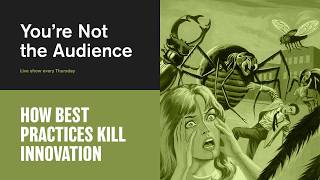


Summary
Calvin Ross Carl makes clear he isn’t dismissing the optimization side of a business. Every company needs it, but it should protect innovation, not replace it. The trouble comes when a bold idea meets a request for numbers or a test, and the honest answer is that nobody will know until it’s done. Calvin’s reminder: every best practice that exists today is there because someone ignored a prior one. Nothing is set in stone, and sometimes the right answer to “crunch these numbers” is no.
Highlights
- Optimization should protect innovation, not replace it.
- Every best practice exists because someone ignored a prior one.
- The goal is knowing when efficiency is the wrong tool.
Key insights
New ideas can’t prove themselves in advance
Asking a crazy idea for numbers before it exists sets it up to fail, because the results only arrive once it’s done.
Saying no is part of the job
Calvin argues it’s sometimes okay to push back on testing and data, especially when the work is meant to break new ground.
Detailed analysis
This is Calvin’s closing thought on the whole argument, and it turns the history of best practices into permission. If every standard began as a rule someone broke, then breaking rules isn’t reckless by definition. The skill isn’t ignoring data. It’s recognizing the moments when optimization’s tools simply can’t measure what you’re trying to do.
Conclusion
Respect optimization, but know when to set it aside. That judgment is where new best practices come from.
Every company needs optimization. But it should also be there to protect innovation, not replace it. That is definitely one of the biggest challenges: optimization often replaces a chance at innovation, because you have this crazy idea, and someone asks, “All right, let’s see some numbers behind it,” or “Let’s test it,” and you’re like, “We won’t know until it’s done.” That’s always the challenge.
So it is definitely worth remembering that every best practice that has ever existed, and exists today, is there because someone ignored a prior best practice. I think that’s a really important thing for us to remember: nothing is ever set in stone. Even when somebody says you need to follow up, do this, crunch these numbers, sometimes it’s okay to say no. The big goal is to know when efficiency and optimization is the wrong tool.