The secret to a useful vision
Vague visions don’t create flexibility—they create drift. Chris Erickson on why a useful vision is specific, measurable, and clear enough for teams to act on.


Summary
Chris Erickson argues that too many vision statements are vague. They sound inspiring but don’t drive action or give direction. Many CEOs, especially at early-stage startups, keep visions loose to stay flexible, but Chris says vagueness creates drift instead. He compares going on a hike with completing the Twin Lakes Loop on July 2nd: both are true, but only one is actionable. Spelling out the details up front lets people decide how to support the vision, and a vision a team can measure saves it from slow, inefficient guessing.
Highlights
- Vague visions sound inspiring but don’t drive action.
- Keeping a vision loose to stay flexible creates drift instead.
- If a team can’t measure the vision, it’s left guessing and checking.
Key insights
True isn’t the same as actionable
A vague vision isn’t wrong, it’s just incomplete. Without a where and a when, nobody knows what to do next.
Details let people commit
Doing the work to define the vision up front gives people what they need to make decisions and back it with confidence.
Detailed analysis
The pull toward a loose vision usually comes from a good place: leaders don’t want to box their teams in. But a vision with no finish line pushes the hard choices down to everyone else, who each fill in the blanks differently. A specific, measurable vision does the opposite. It sets the target once, so the team spends its energy moving toward it instead of debating what it is.
Conclusion
Make your vision specific, directional, actionable, and real. Then do the same for every part of the business.
Hey friends, it’s Chris at Parliament.
Too many vision statements are vague. They sound inspiring, but they don’t drive action. They don’t provide direction.
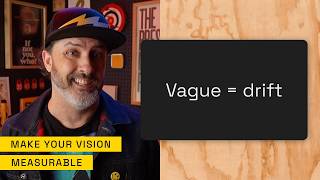
Many CEOs, especially at early-stage startups, don’t want to limit their teams. They want to maintain flexibility. They don’t want to cut off possibilities or potential paths. They want to stay flexible. But vague visions don’t create flexibility. They create drift.
It’s the difference between saying, “Hey, we’re going to go on a hike,” versus, “We’re going to complete the Twin Lakes Loop on July 2nd.” Or saying, “We’re going to watch some football,” versus, “We’re going to watch the Ducks play Ohio State at my house Saturday at noon.” Do you see the difference? The vague examples are not inaccurate, per se. They are true, but they aren’t actionable without additional information.
So, why not do the work to provide all the details up front? That way, people can make decisions and support the vision accordingly.
If your team can’t measure your vision, then they’re guessing and checking, and that’s slow and inefficient.
So, make your vision specific, make it directional, make it actionable, and make it real. Even better, get crisp and make measurable visions for every part of your business—operations, financials, brand, culture, product, services. But I’ll save that for another video.
All right, that’s it for me. Be brave. Stand apart.